

Symptoms of a Bad or Failing Drive Shaft

AAMCO Bay Area • December 20, 2020

A drive shaft is a rod-like component that transmits torque from your vehicle’s engine to the wheels. It’s essentially the shaft that drives your vehicle. The driveshaft transmits torque at varying angles between driveline components. It’s important that the shaft assembly is flexible because drivetrain axles vibrate up and down and move laterally with braking and acceleration. The driveshaft assembly comprises of; the propeller shaft, universal joints, slip splines and yokes.


HOW DOES THE DRIVESHAFT WORK?


It’s important to note that front-wheel drive vehicles don’t have drive shafts. The transmission and axle are combined into a single unit called a transaxle. However, in four wheel and rear wheel drive vehicles the transmission and axle are separate units. Hence the driveshaft which transfers the turning motion of the transmission to the axle.


This component has a tubular design and is usually made from aluminum, steel or carbon fiber to ensure its both strong and lightweight.


SOME COMMON SIGNS OF A FAILING DRIVESHAFT


It’s important to note that the driveshaft by itself rarely fails. However, due to excessive stress and corrosion it will eventually exhibit signs of failure.


1. INTENSE VIBRATIONS AND SHUDDERING

Vibrations and shuddering are the most common sign of a failing driveshaft. If the bushings or U-joint wear out you can experience excessive driveshaft vibration. This may also result from the driveshaft not being bolted down properly or the unit being out of balance. A driveshaft that’s vibrating excessively can also cause the wearing of other drivetrain components.

2. UNUSUAL NOISES

Unusual noises are another indicator of a worn drive shaft. If the bearings and bushings that support the driveshaft and U-joints fail or get worn they affect the driveshaft’s ability to rotate normally. When this happens, you will experience scraping, squeaking, clanking and rattling sounds. If you hear any of these noises its critical that you schedule an appointment with our technicians at AAMCO Bay Area.

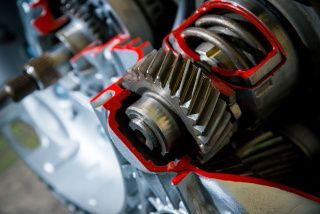
Close-up of metal gears coated in red lubricant inside a mechanical assembly
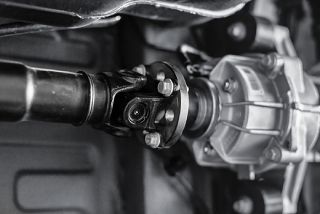
Close-up of a metal driveshaft and universal joint connecting to a gearbox.

3. SHUDDERING DURING ACCELERATION

Are you experiencing a significant amount of shuddering as you accelerate from low speed or a stop position? This is another key sign of failing driveshaft components. A worn center bearing or loose U-joint may cause this. You may also experience some strange sounds as your vehicle shudders. It’s important that you have this checked out as soon as possible by our professionals at AAMCO Bay area.

4. TURNING PROBLEMS

If you are experiencing problems when taking turns, there is a high likelihood that your driveshaft is worn. A damaged driveshaft prevents wheels from turning properly hence limiting your control of the vehicle. This is a safety concern and needs to be checked urgently at AAMCO Bay Area.


To ensure that your driveshaft is always in good working condition you should keep it well lubricated. Lack of lubrication can cause damage to the driveshaft and its components. High-use driveshafts should be inspected regularly since they can wear prematurely due to excessive movement.


GET THE BEST AUTO REPAIR AND DRIVESHAFT SERVICES AT AAMCO BAY AREA


Driveshafts are a core component of your vehicle’s drivetrain. Any issues with them greatly compromise the drivability and performance of your vehicle.


Addressing your driveshaft issues promptly is crucial. If you experience any of the mentioned signs or If you need driveshaft and other auto repair services it’s imperative that schedule an appointment at AAMCO Bay Area to have your vehicle inspected by professional technicians.

Share

Close-up of a manual gear shift knob and car keys on a dark dashboard
By AAMCO Bay Area June 21, 2021
Transmission problems are never fun. They can be as simple as needing new solenoids or as serious as a failing transmission, but it's a good idea to know the signs and symptoms that you may have a necessary transmission repair to handle
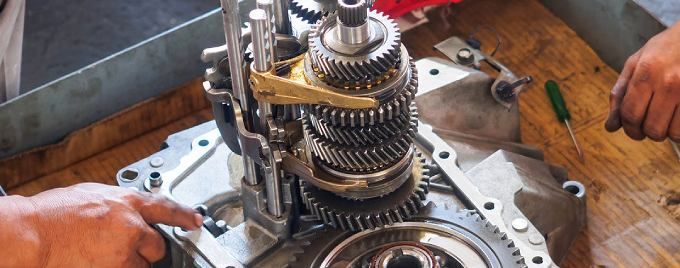
Hands repairing exposed gears inside a metal gearbox on a workbench
By AAMCO Bay Area June 17, 2021
Basically, your transmission is responsible for transmitting power from your car's engine to the wheels. So, what's the difference between each of the three and which is best for you? Let's do a quick overview.
Hand turning a car's center climate control knob, with blue and red temperature markings.
By AAMCO Bay Area June 17, 2021
If your car's AC stops working, what can you do to help diagnose a necessary repair or get it fixed yourself? It's best to bring your car to a trusted mechanic for an air conditioning repair service.
More Posts