When Do I Need to Change My Transmission Fluid

AAMCO Bay Area • March 3, 2020

Your car’s transmission fluid plays an important role in performance. It’s what lubricates the internal components of the transmission system, preventing wear over time. Transmission fluid is ideally the lifeblood of your vehicle’s transmission system. That is, of course, assuming you care for your car and ensure you have good levels of clean fluid running in the system always.


Some modern vehicles come with a sealed transmission, and owners are not required to change the fluid. However, transmission experts at AAMCO Bay Area recommended changing your transmission every 30,000 miles or every other year as a preventive maintenance measure. Depending on the situation, you might also require to perform a transmission flush.


Related: Why You Need Preventative Maintenance

Related: What To Do When Your Transmission Fails

Related: How Healthy Transmission Fluid Should Look

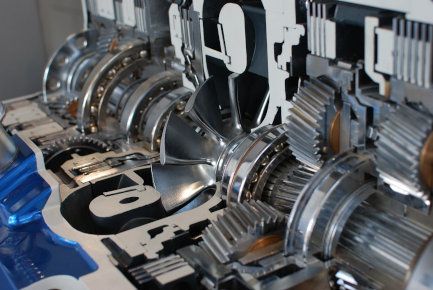
Close-up of shiny metallic gears and turbine parts in a machine assembly

Signs and Symptoms, You Need a Transmission Fluid Change


It’s a good idea to check in with your local auto care center or consult a mechanic when you notice any of the following symptoms that require transmission fluid change.


Squealing and Grinding Noise During Shifting

Grinding and squealing noises from any part of your car are quite irritating. In case they are coming from your transmission, it’s a sure sign of a problem that needs checking. The moment you experience any of these noises, check your transmission fluid levels while your engine is still running. Also, take note of the color. If its anything other than bright red, or with a burnt smell, you may need a transmission change service.

Difficulty Shifting

It doesn’t matter if you drive a manual or automatic transmission vehicle; it requires shifting between gears. If you have an automatic transmission vehicle, you may notice it shifts harder or at odd intervals, which maybe sooner or later than normal. In a manual transmission vehicle, it can be physically difficult to change gears.


Surging

When your transmission fluid or oil gets dirty and needs changing, your vehicle surges forward or backward when the brake or accelerator is pressed for no reason. This surging might be due to contaminants in your transmission fluid, preventing the smooth flow through your transmission system.

Slipping Gears

When the flow of transmission fluid in the system is interrupted due to grime, it interferes with the pressure levels. The pressure works to keep the gears in position. After some time, your transmission will begin to slip out of gear without warning.


Delayed Response after Shifting Gears

Dirty transmission fluid can cause a delay in your car or truck after shifting gears. This problem is also related to fluid flow interruption. The delay maybe for a moment or several seconds. The longer the delay, the more significant the contamination within your transmission system.

Close-up of metal gears and machine parts in an industrial mechanism

The moment you experience any of the above symptoms when driving, you need to immediately check into an auto care center and have your system checked. While a simple change in the transmission fluid may solve your problems, getting your vehicle checked by a professional may help locate hidden issues that might be potentially problematic.


Transmission Fluid: In General


It’s important to note that over-doing oil changes are never a bad thing. Frequently changing your oil won’t harm your transmission. Most manufacturers recommend changing transmission oil on the low end after every 30,000 miles. In case you can’t find the interval information for your vehicle, consulting your local mechanic can help you get closure.


Other typical service intervals are between 60,000 miles and 100,000 miles, which is not unreasonable. However, 100,000 miles might be pushing it. If your owner’s manual states that your transmission fluid change intervals are good for 100,000 miles, take the recommendation with a grain of salt.


AAMCO Bay Area Transmission Repair Service


Changing your transmission routinely offers a lot of benefits, for starters, you safeguard your transmission from failure, and secondly, it offers your mechanic a chance to spot any fluid leaks in the system that could be potentially problematic. At AMMCO Bay Area, we offer state of the art transmission maintenance and service.


We are a leader in transmission repair and maintenance in the Bay Area for a reason; we have highly skilled technicians and use specialized equipment. We also offer other auto care repair services, including brake service, oil change service, suspension system maintenance, and service, regular car maintenance, and service, factory recommended service, engine tune-up service, and many more.

Does your car surge or produce a grinding noise shifting gears? Don’t push it any further. Let our technicians at AAMCO Bay Area solve your transmission troubles for you. Remember, your transmission is one of the most expensive replacements in your vehicle.
Share

Close-up of a manual gear shift knob and car keys on a dark dashboard
By AAMCO Bay Area June 21, 2021
Transmission problems are never fun. They can be as simple as needing new solenoids or as serious as a failing transmission, but it's a good idea to know the signs and symptoms that you may have a necessary transmission repair to handle
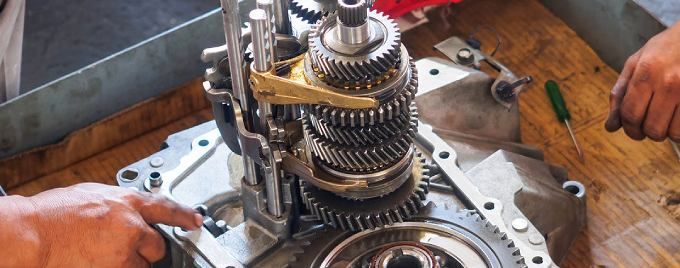
Hands repairing exposed gears inside a metal gearbox on a workbench
By AAMCO Bay Area June 17, 2021
Basically, your transmission is responsible for transmitting power from your car's engine to the wheels. So, what's the difference between each of the three and which is best for you? Let's do a quick overview.
Hand turning a car's center climate control knob, with blue and red temperature markings.
By AAMCO Bay Area June 17, 2021
If your car's AC stops working, what can you do to help diagnose a necessary repair or get it fixed yourself? It's best to bring your car to a trusted mechanic for an air conditioning repair service.
More Posts