Everything You Should Know About Maintaining Your Car's Brake System

AAMCO Bay Area • August 12, 2020

Nothing is more stressful than having brake problems. They are one of the most critical components of any road-going vehicle and for a simple reason— They help you stop. It’s impossible to drive a car without brakes; it’s impractical and dangerous.


Maintenance can be understood in several different ways, from detailing your car to performing an overhaul on your engine. But what is brake maintenance?


Proper brake maintenance involves ensuring your brake system not only performs well but lasts longer. Your brakes, just like your wheel, are exposed to dirt, dust, debris, and heat generation as the wheel rotates. And while a lot of car owners take their brakes for granted, it could spell the difference between life and death on the highway.


Being able to stop before disaster strikes can be the difference between well-maintained brakes and neglected ones.


HOW DOES THE BRAKING SYSTEM WORK?


Compared to other components of your vehicle, the braking system is simple with very few parts but plays a vital role. When you press the brakes driving down the road, it activates the master cylinder. The master cylinder is also known as the brake or vacuum booster. This component works to multiply the amount of force that is generated when you press your foot on the pedal.


Most modern cars will come with two sets of brakes, at the front and rear. The braking lines are distributed from the master cylinder to your brake caliper; this is on a disc brake system. The brake line will connect to a wheel cylinder on a drum brakes system. The brake lines are filled with hydraulic brake fluid.


The master cylinder works to provide the right amount of pressure to the front and rear brake system, offering a safety net in case something fails.


When you press the brake pedal, brake fluid is pumped into the caliper or wheel cylinder. It forces the brake pads to contract to clip the rotors or brake shoes to either contact or separate from the brake drum. This is what causes you to decrease your speed.
BASIC BRAKE MAINTENANCE


Now that you know how the braking system works from the moment you press the brake pedal to the point your car stops, here are a few maintenances to keep your system working smoothly for longer.


Related:
Tips to Maintaining Car Radiator Health

Related: 5 Sounds Of Trouble In Your Car

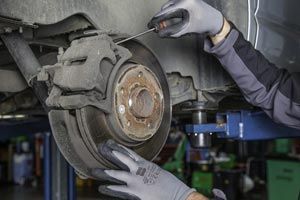
Mechanic inspecting a car’s front brake rotor and caliper in an auto shop
  • Ensure your brake fluid cylinder is always full. When your brake fluid level is low, there’s a lot of strain on the brake master cylinder. This effect will go all the way, affecting all the components in the braking system down the line to your rotors, pads, and drums.
  • Regularly check your brakes. Most modern cars come with alloy or steel wheels, which makes it easy to inspect your brake components without removing the wheel. Before you drive off, check your pads for wear, scratches and pits on the rotor, and your caliper for rust or cracks. Regularly checking will help you spot problems early before it’s too late.
  • Watch out for dashboard lights. Modern cars now come with a built-in system that checks your brakes for issues. When your brakes are faulty, a BRAKE light on your dashboard will be triggered. Depending on your car, the emergency brake light will be on. This light might come on due to several reasons, make sure you consult a professional mechanic such as one from AAMCO Bay Area for an inspection service.
  • Check your underbelly. At the same time, the underside of your vehicle takes the brunt of everything; it’s perhaps the most ignored area in a car. Your brake line passes on your car underbelly that is exposed to ice, salt, tar, and pebbles that could easily cause damage.
  • Schedule a regular maintenance brake service with your mechanic. While your owner’s manual has a blueprint of your brake system and maintenance tips, getting a professional to maintain this critical component is much better. During your regular oil change service, ask your mechanic to check your brake system for issues.


AAMCO BAY AREA BRAKE SYSTEM SERVICE


AAMCO Bay Area is a leading transmission center specializing in all issues that may affect your transmission system. Our certified technicians have the industry experience, state of the art equipment to handle any transmission issue you might have.

We also offer other auto care services, including brake system service, engine tune-up service, regular oil change service, and many more.


Is there a screeching sound when you press your brake pedal? Your braking system might be faulty. Call or visit your local AAMCO Bay Area for a brake repair service.

Share

Close-up of a manual gear shift knob and car keys on a dark dashboard
By AAMCO Bay Area June 21, 2021
Transmission problems are never fun. They can be as simple as needing new solenoids or as serious as a failing transmission, but it's a good idea to know the signs and symptoms that you may have a necessary transmission repair to handle
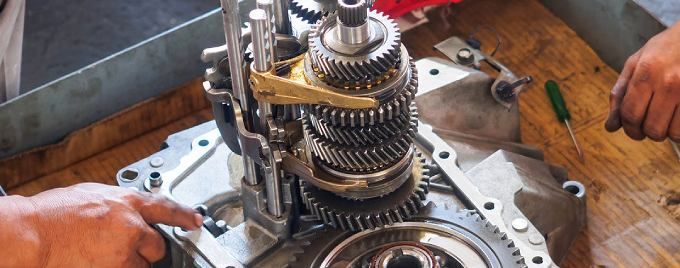
Hands repairing exposed gears inside a metal gearbox on a workbench
By AAMCO Bay Area June 17, 2021
Basically, your transmission is responsible for transmitting power from your car's engine to the wheels. So, what's the difference between each of the three and which is best for you? Let's do a quick overview.
Hand turning a car's center climate control knob, with blue and red temperature markings.
By AAMCO Bay Area June 17, 2021
If your car's AC stops working, what can you do to help diagnose a necessary repair or get it fixed yourself? It's best to bring your car to a trusted mechanic for an air conditioning repair service.
More Posts