Dashboard Warning Lights - What do they mean? | Infographic

AAMCO Bay Area • August 25, 2020

DON’T GET OVERWHELMED THE WARNING LIGHTS ON YOUR DASHBOARD


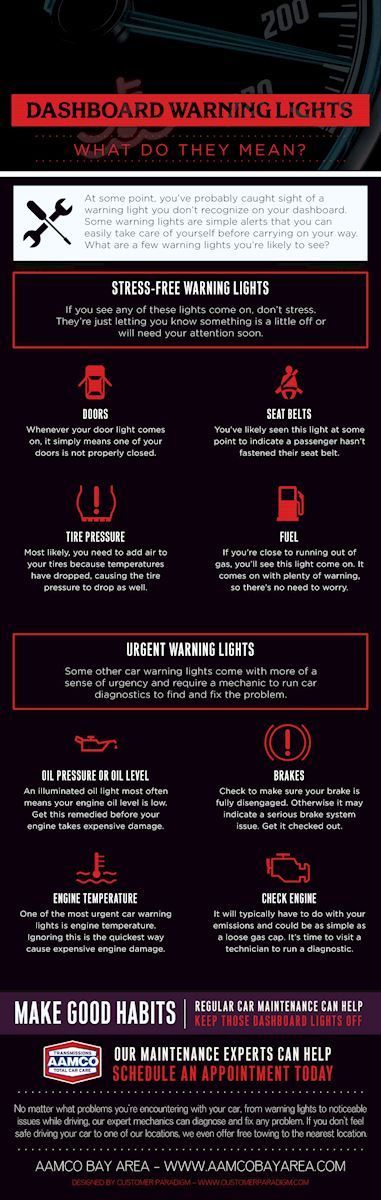
At some point, you’ve probably caught sight of a warning light you don’t recognize on your dashboard. Some warning lights are simple alerts that you can easily take care of yourself before carrying on your way. On the other hand, other warning lights signal you need to get your car to a mechanic as soon as possible. What are a few warning lights you’re likely to see?

Red and black Dashboard Warning Lights infographic with white text and small dashboard icons on a black background

STRESS-FREE WARNING LIGHTS


If you see any of these lights come on, don’t stress. They’re just letting you know something is a little off or will need your attention soon. You don’t necessarily have to pull off the road and you almost certainly don’t need to schedule an appointment at an auto repair shop.


DOORS

Whenever your door light comes on, it simply means one of your doors is not properly closed. You can keep driving carefully and whenever you stop at a light, you can check your door. Otherwise, pull to the side of the road and check all the doors you recently closed before driving.


SEAT BELTS

If you frequently drive passengers around in your car, you’ve likely seen this light at some point to indicate they haven’t fastened their seat belt. Simply ensure everyone in the car has their seatbelts on, though this light will typically only come on if one of the front seats has a passenger without their seatbelt buckled.


TIRE PRESSURE

Especially during transitional seasons when temperatures fluctuate more than usual, you’re likely to encounter this light, which means your tire pressure in at least one tire is not in the optimal range. Most likely, you need to add air to your tires because temperatures have dropped, causing the tire pressure to drop as well. Just check the pressure in each of your tires if your car doesn’t inform you of that already and adjust tire pressure in each accordingly.


FUEL

If you’re close to running out of gas, you’ll see this light come on. Usually, it comes on with plenty of warning, so there’s no need to worry. Just plan on filling up your car with gas on your way home or as soon as you pass a gas station.

URGENT WARNING LIGHTS


Some other car warning lights come with more of a sense of urgency and require a mechanic to run car diagnostics to find and fix the problem. Don’t stress too much but also schedule an appointment with your mechanic sooner rather than later if you see one of these light up in your car.

Auto mechanic in blue coveralls holding a clipboard in a garage, with another worker repairing a car in the background

OIL PRESSURE OR OIL LEVEL

An illuminated oil light most often means your engine oil level is low. Whenever this light comes on, it’s a good idea to be careful how much you continue to drive, especially more strenuous driving. Whenever your oil level is low, you’re at risk of overheating your engine and causing a lot of damage to your engine’s inner parts. You should pull to the side of the road and check your oil level then top it off as soon as possible if it’s low. Plus, if your oil level is low, there’s likely an underlying problem that should be addressed by a mechanic.


BRAKES

The first thing you can do if your brake light is illuminated is to make sure your parking brake is fully disengaged. Otherwise, it could be an indication that some other part of your brake system is in need of attention. If your parking brake isn’t engaged at all and the light stays on, it’s best to schedule an appointment with your mechanic to have it checked out.


ENGINE TEMPERATURE

One of the most urgent car warning lights is engine temperature. It will come on when your engine temperature is too high and an overheating engine is the quickest way to rack up an expensive engine repair bill. It could be either low engine oil or coolant levels contributing to your engine temperature – or simply a failing engine temperature sensor. Whenever you see this light on your dashboard, pull to the side of the road, give your car some time to cool down, and call your local mechanic.


CHECK ENGINE

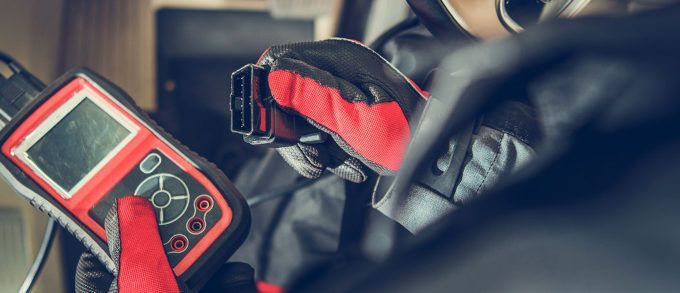
The most well-known warning light is also one of the most vague in meaning. It will typically have to do with your emissions and could be as simple as a loose gas cap. If your gas cap is tightly secured, it’s time to schedule an appointment with your mechanic to run a diagnostic check. They should be able to easily check for the error code that triggered your check engine light and suggest necessary repairs from there.


Related: Routine Car Maintenance That Can Save You Money in The Long Run

Related: Tips to Maintaining Car Radiator Health


LET AAMCO BAY AREA MECHANICS DIAGNOSE THE PROBLEM


No matter what problems you’re encountering with your car, from warning lights to noticeable issues while driving, our expert mechanics can diagnose and fix any problem. If you don’t feel safe driving your car to one of our locations, we even offer free towing to the nearest location.
Share

Close-up of a manual gear shift knob and car keys on a dark dashboard
By AAMCO Bay Area June 21, 2021
Transmission problems are never fun. They can be as simple as needing new solenoids or as serious as a failing transmission, but it's a good idea to know the signs and symptoms that you may have a necessary transmission repair to handle
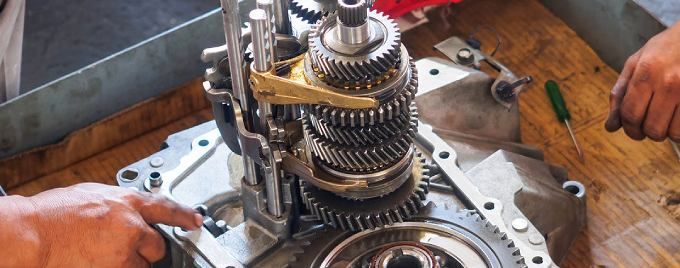
Hands repairing exposed gears inside a metal gearbox on a workbench
By AAMCO Bay Area June 17, 2021
Basically, your transmission is responsible for transmitting power from your car's engine to the wheels. So, what's the difference between each of the three and which is best for you? Let's do a quick overview.
Hand turning a car's center climate control knob, with blue and red temperature markings.
By AAMCO Bay Area June 17, 2021
If your car's AC stops working, what can you do to help diagnose a necessary repair or get it fixed yourself? It's best to bring your car to a trusted mechanic for an air conditioning repair service.
More Posts